
Modern workplaces rely on an ever-growing stack of tools to get work done. CRMs, HR systems, project platforms, analytics tools, and custom applications all play a role in daily operations. The challenge is not access to software. The challenge is adoption. When employees struggle to understand how tools work or how processes should be completed, productivity slows, mistakes increase, and support teams feel the pressure.
Traditional training methods do not scale. Static documentation becomes outdated. Live training sessions fail to meet people where they work. Employees need help in the moment, inside the tools they already use. This is where in-app guidance and enablement software plays a critical role.
These platforms provide contextual support directly within applications. They guide employees step by step, reinforce best practices, and reduce reliance on external training or constant hand-holding. For HR, IT, and operations teams, this means faster onboarding, fewer support tickets, and more consistent process execution. For employees, it means confidence, clarity, and less frustration.
However, in-app guidance alone is not enough. Without a centralized place to explain the “why” behind processes, share updates, and support learning beyond a single application, enablement efforts can feel fragmented. This is why many organizations pair in-app guidance with a robust intranet like Axero. Together, they create a connected enablement experience that supports employees before, during, and after they interact with workplace tools.
Top 11 in-app guidance and enablement software for 2026
- Axero
- WalkMe
- Whatfix
- Pendo
- Appcues
- Userpilot
- Chameleon
- Intercom Product Tours
- Gainsight PX
- SAP Enable Now
- Lemon Learning
What is in-app guidance and enablement software?
In-app guidance and enablement software provides real-time, contextual assistance within digital applications. It helps users complete tasks correctly by showing them exactly what to do, where to click, and when to act, without leaving the application they are working in.
Common use cases include onboarding new employees, rolling out new software features, standardizing workflows, and reducing errors in complex systems. Guidance can appear as tooltips, walkthroughs, checklists, banners, or embedded help content, all triggered based on user behavior or role.
The goal is simple. Reduce confusion and speed up proficiency. Instead of relying on memory or external documentation, employees receive support at the moment of need. When paired with a centralized intranet like Axero, organizations can also connect this tactical guidance to broader process documentation, training resources, and company communications.
What to consider when choosing the right in-app guidance and enablement software
Choosing the right solution depends on how well it fits into your broader digital workplace strategy, not just its standalone features.
Ease of creation and maintenance
Non-technical teams should be able to build and update guidance quickly. If creating walkthroughs requires heavy development work, adoption will stall and content will fall out of date.
Contextual targeting and personalization
The best platforms deliver guidance based on role, behavior, location, or progress. This ensures employees only see what is relevant to them, reducing noise and frustration.
Analytics and performance insights
You need visibility into what content is being used and where employees struggle. Strong analytics help teams improve guidance and identify process gaps.
Integration with your digital workplace
In-app guidance should not exist in isolation. Look for solutions that complement your intranet, knowledge base, and communication tools. Axero plays a key role here by anchoring guidance to centralized knowledge and governance.
Scalability and governance
As your organization grows, guidance must scale without becoming chaotic. Role-based permissions, content ownership, and lifecycle management are essential for long-term success.
11 best in-app guidance and enablement software
1. Axero
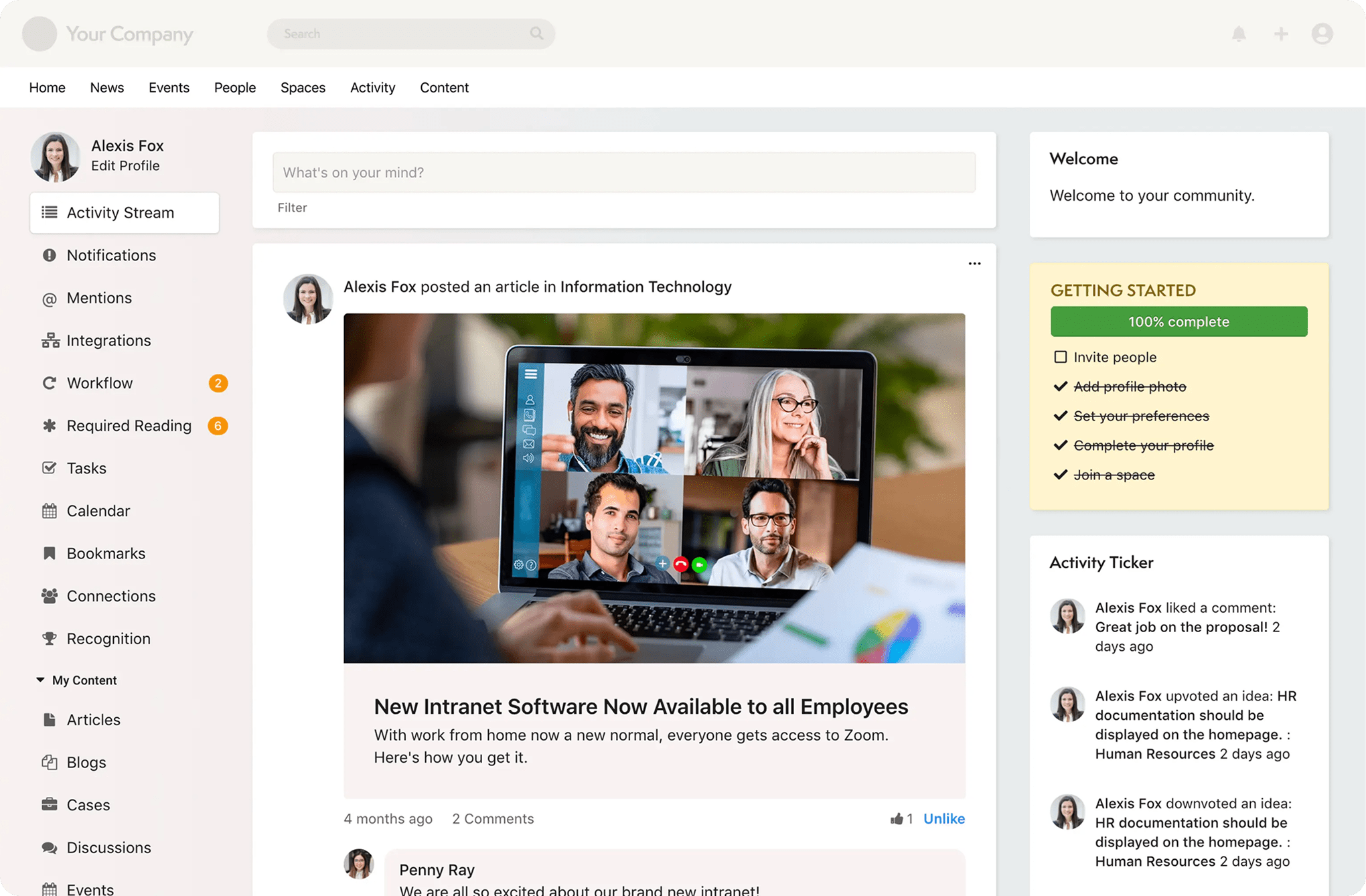
Axero approaches in-app guidance from a broader enablement perspective. Instead of limiting support to overlays and walkthroughs inside individual tools, Axero provides the centralized foundation that makes guidance effective and sustainable. It gives employees one trusted place to understand processes, policies, and expectations before and after they interact with business applications. By pairing Axero with in-app guidance tools, organizations create a complete enablement loop. Employees learn the “why” in Axero through structured knowledge, onboarding hubs, and role-based content. They then receive contextual, task-level guidance inside applications, reinforced by links back to Axero pages, resources, and workflows.

Axero also reduces the burden on IT and HR by centralizing ownership, governance, and updates. When processes change, teams update content once and ensure guidance across tools stays aligned. This eliminates conflicting instructions and outdated training materials that often derail enablement efforts. For organizations serious about long-term adoption, Axero acts as the connective tissue between people, processes, and technology.
Key features of Axero
- Centralized knowledge hub: Create a single source of truth for processes, policies, and training that supports in-app guidance across tools.
- Role-based content targeting: Deliver relevant enablement content based on department, role, or location to reduce noise.
- Governance and lifecycle management: Maintain accuracy and ownership as guidance and documentation evolve.
Best for: Organizations that want scalable enablement anchored by a strong intranet and knowledge foundation.

2. WalkMe
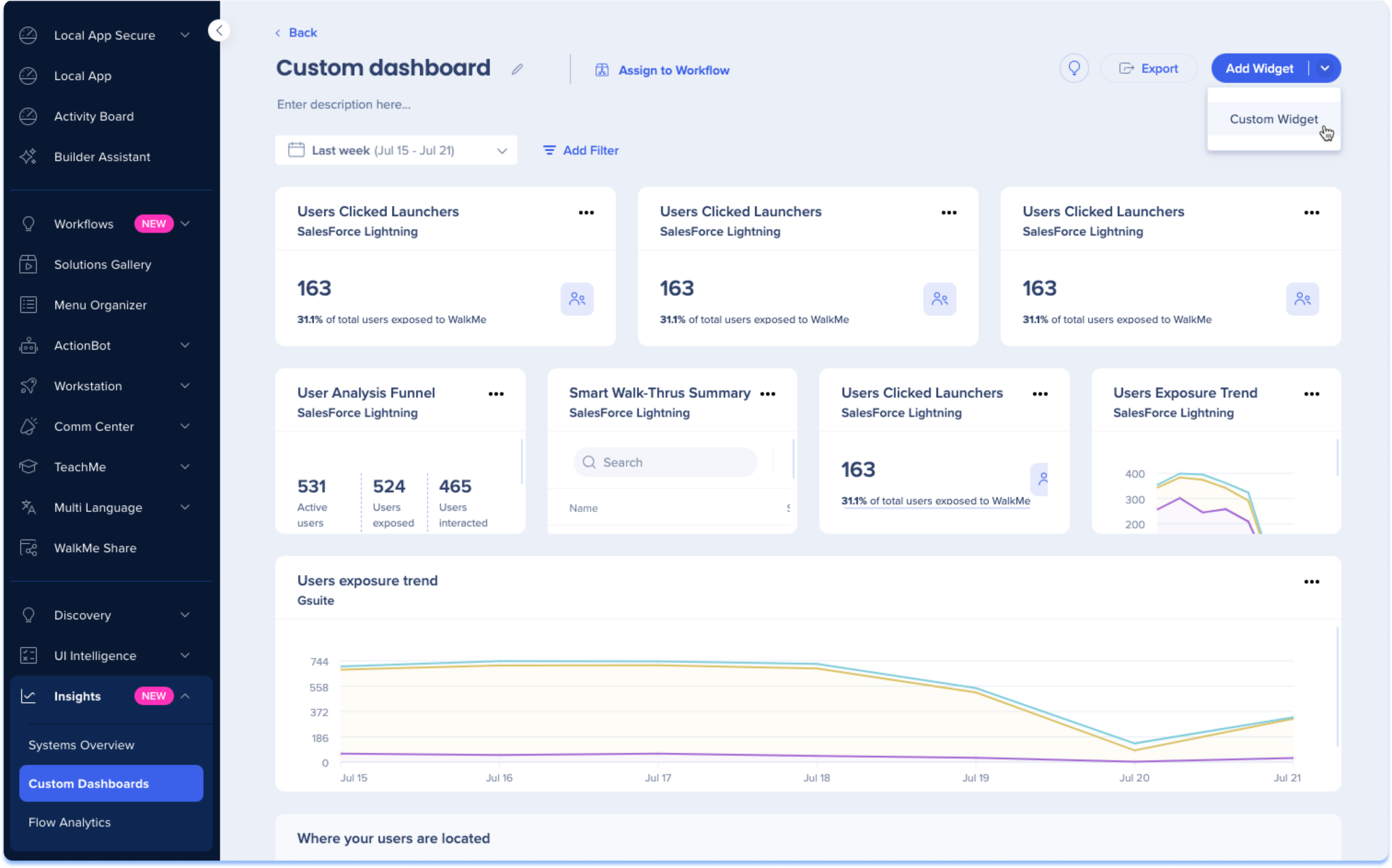
WalkMe is one of the most established platforms in the in-app guidance space. It focuses on delivering step-by-step walkthroughs, automation, and contextual help directly inside enterprise applications. Large organizations often use WalkMe to support complex systems such as ERP, CRM, and HR platforms.
WalkMe excels at guiding users through multi-step processes and enforcing standardized workflows. Its automation capabilities reduce repetitive actions and help ensure tasks are completed correctly. Advanced analytics provide insight into user behavior, friction points, and process drop-offs.
Due to its depth and enterprise focus, WalkMe typically requires dedicated ownership and technical involvement. It works best when paired with a centralized intranet like Axero, where broader process context, communications, and training live outside the application layer.
Key features of WalkMe
- Interactive walkthroughs: Guide users through complex workflows step by step inside applications.
- Process automation: Reduce manual actions and enforce consistency across critical tasks.
- Behavior analytics: Identify friction points and optimize guidance based on real usage data.
Best for: Large enterprises supporting complex, high-risk applications at scale.
3. Whatfix

Whatfix provides contextual guidance, onboarding flows, and self-help content across web and desktop applications. It focuses on helping users adopt software faster by embedding learning directly into the application experience.
One of Whatfix’s strengths is its balance between power and accessibility. Business teams can create and update guidance without heavy development effort, while still supporting advanced targeting and analytics. Whatfix also offers content reuse, allowing teams to repurpose guidance for help centers or training materials.
When combined with Axero, Whatfix works well as the execution layer for in-app support, while Axero houses deeper documentation, change communications, and role-based onboarding journeys that extend beyond individual tools.
Key features of Whatfix
- No-code content creation: Build walkthroughs and tooltips without engineering support.
- Contextual self-help: Offer searchable, in-app help based on user actions.
- Adoption analytics: Track usage, completion rates, and areas of friction.
Best for: Organizations seeking flexible in-app guidance that business teams can manage independently.
4. Pendo
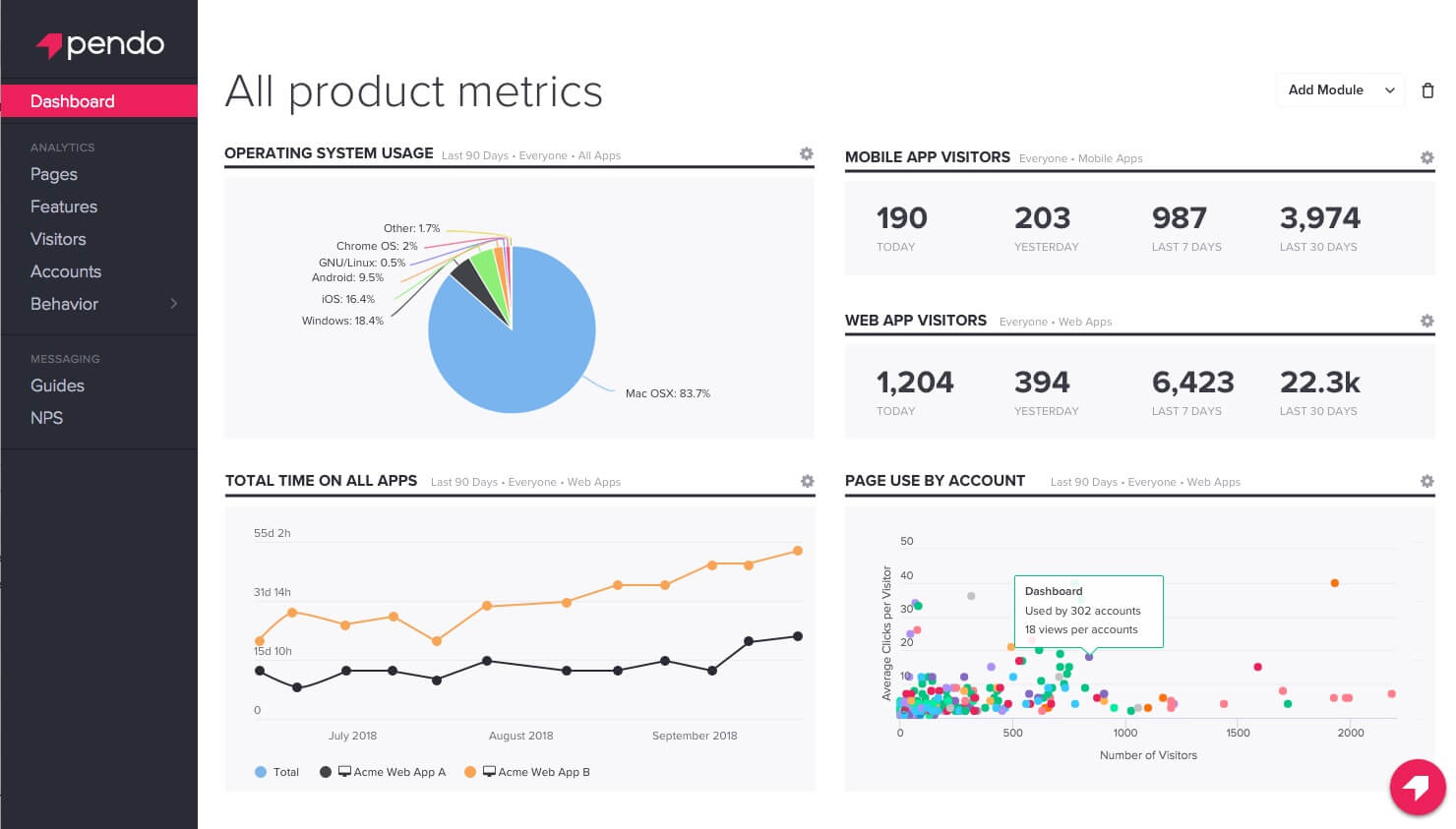
Pendo combines product analytics with in-app guidance to help teams understand how users interact with software and where they struggle. It allows organizations to create guides, tooltips, and onboarding flows based on real usage data rather than assumptions.
Pendo’s strength lies in visibility. Teams can see which features employees use, which they ignore, and where drop-offs occur. This makes it easier to design guidance that addresses actual behavior gaps. In larger organizations, Pendo often supports internal tools as well as customer-facing applications.
However, Pendo focuses heavily on analytics first. Without a centralized place to explain broader processes, policies, or change context, guidance can feel transactional. Pairing Pendo with Axero ensures analytics-driven insights translate into clear documentation, communications, and learning paths employees can trust.
Key features of Pendo
- Product usage analytics: Understand how employees interact with applications in real time.
- In-app guides: Deliver walkthroughs and tooltips informed by behavioral data.
- Feedback collection: Capture user sentiment directly within applications.
Best for: Data-driven teams that want analytics-led guidance and adoption insights.
5. Appcues

Appcues focuses on creating in-app experiences that guide users through key actions and features. It emphasizes ease of use, allowing non-technical teams to build onboarding flows, announcements, and prompts without code.
Appcues works well for targeted guidance and feature adoption. Teams can quickly launch walkthroughs to support new releases or changes. Its visual editor makes iteration simple, which helps keep guidance relevant as tools evolve.
That said, Appcues works best for focused, application-level enablement. Organizations still need a central system like Axero to manage long-form documentation, onboarding hubs, and governance that sit outside individual apps.
Key features of Appcues
- Visual flow builder: Create onboarding and guidance experiences without coding.
- Targeted messaging: Trigger guidance based on user attributes and actions.
- Rapid iteration: Update and test guidance quickly as applications change.
Best for: Teams that want fast, lightweight in-app onboarding for specific tools.
6. Userpilot
Userpilot is designed to help teams drive adoption through contextual guidance and engagement prompts. It supports tooltips, walkthroughs, checklists, and in-app announcements that respond to user behavior.
Userpilot stands out for its flexibility and affordability compared to more enterprise-heavy platforms. Business teams can deploy guidance quickly without extensive setup. It also includes basic analytics to track engagement and completion.
For organizations managing multiple systems and complex processes, Userpilot benefits from integration with Axero. Axero provides the structured knowledge and governance layer that ensures guidance remains consistent across departments and tools.
Key features of Userpilot
- Behavior-based triggers: Deliver guidance based on how users interact with applications.
- Checklists and prompts: Reinforce learning and drive task completion.
- Engagement tracking: Monitor adoption and content performance.
Best for: Growing organizations that need accessible, behavior-driven guidance.
7. Chameleon
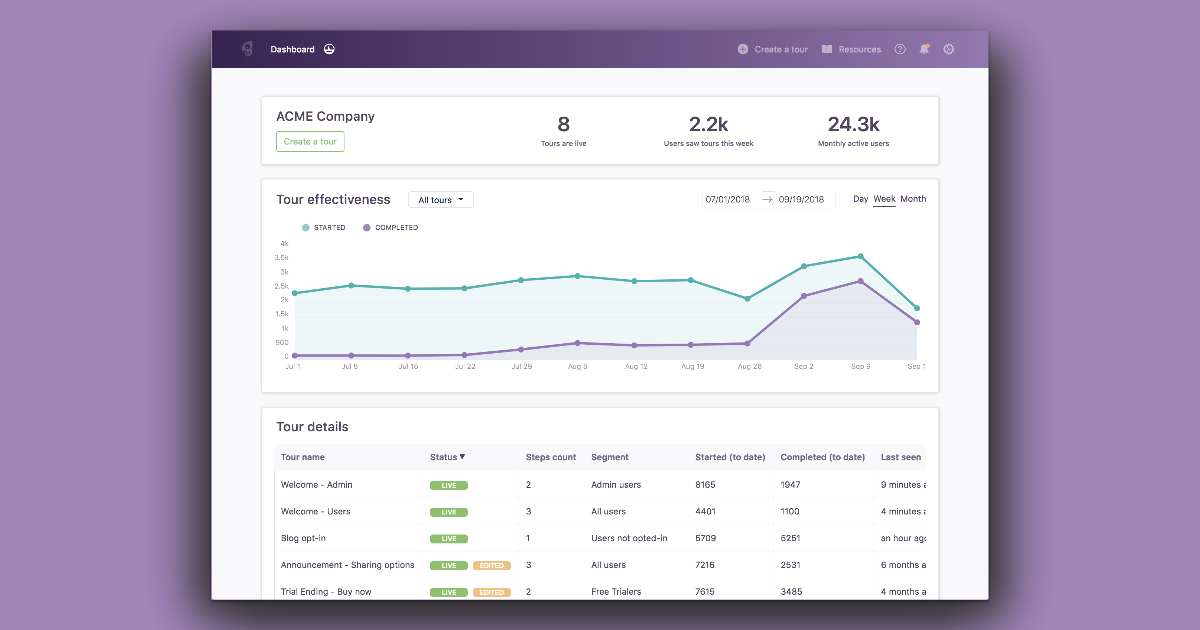
Chameleon focuses on delivering polished, on-brand in-app guidance experiences. It allows teams to create tooltips, banners, tours, and embedded help that align closely with brand standards.
Chameleon is often chosen by teams that value design consistency and user experience. Its customization options help guidance feel native rather than intrusive. This can increase trust and reduce resistance to prompts and walkthroughs.
Like other in-app tools, Chameleon works best when paired with a centralized intranet. Axero complements Chameleon by hosting deeper explanations, process documentation, and change communications that guidance alone cannot replace.
Key features of Chameleon
- Customizable UI patterns: Create guidance that matches your application’s design.
- Contextual tours and banners: Support feature adoption and announcements.
- Segmentation options: Target guidance to specific user groups.
Best for: Teams prioritizing branded, user-friendly in-app experiences.
8. Intercom Product Tours

Intercom Product Tours extends Intercom’s customer messaging platform with in-app walkthroughs and prompts. It allows teams to guide users through key actions, highlight features, and provide contextual nudges at the right moment.
For internal enablement, Intercom Product Tours works best when organizations already use Intercom for support or internal tooling. Teams can reuse existing segmentation and messaging logic to deliver relevant guidance without introducing a separate platform.
However, Product Tours focuses on lightweight guidance rather than full-scale enablement. Organizations often rely on Axero to provide the deeper process documentation, onboarding content, and governance that sit outside the scope of in-app prompts.
Key features of Intercom Product Tours
- In-app walkthroughs: Guide users through key actions and features.
- Targeted messaging: Leverage user data to deliver relevant prompts.
- Shared ecosystem: Extend existing Intercom workflows into product guidance.
Best for: Teams already invested in the Intercom platform.
9. Gainsight PX
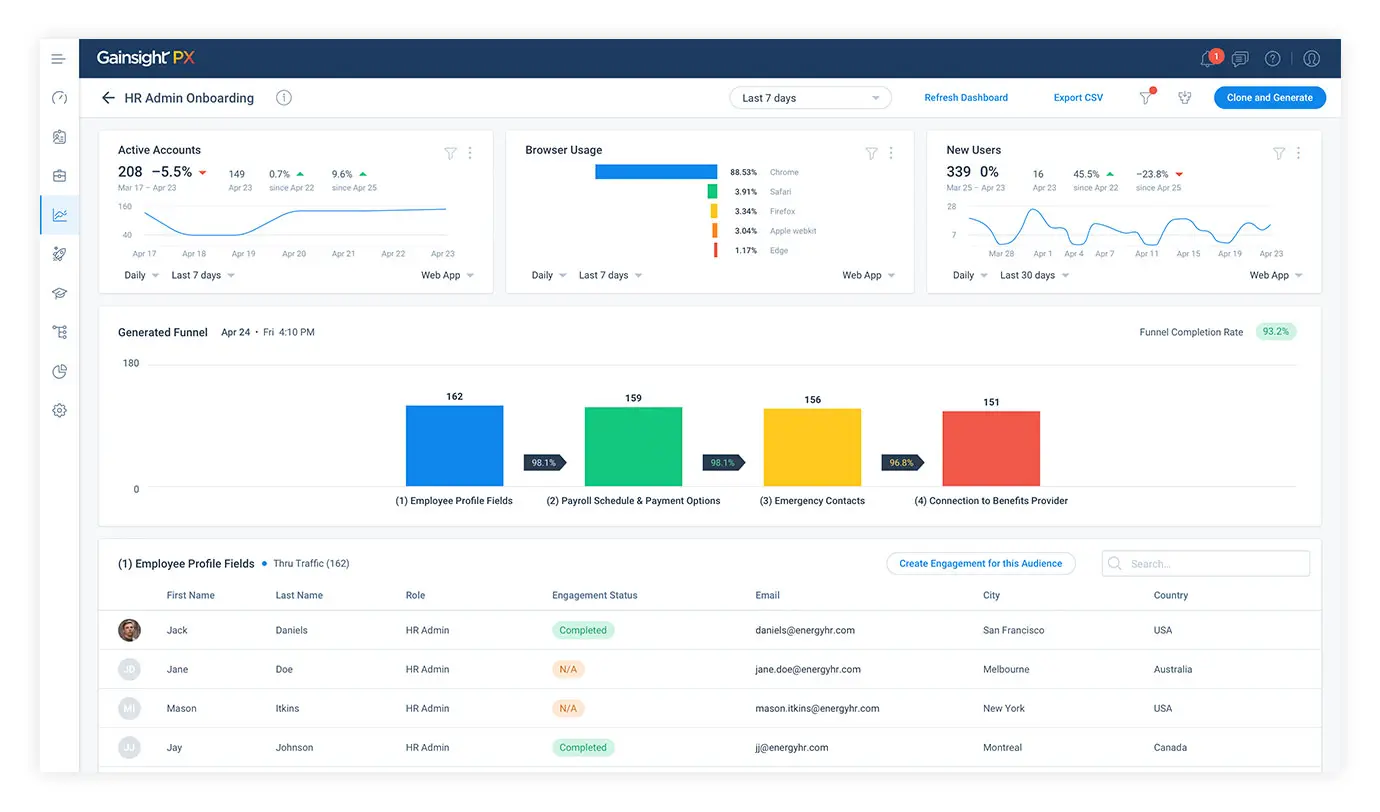
Gainsight PX combines product analytics with in-app engagement tools designed to drive adoption and reduce friction. It provides visibility into how users interact with software and allows teams to trigger guidance based on usage patterns.
Gainsight PX is often used in environments where adoption metrics and user behavior insights are critical. Teams can identify underused features and deploy targeted walkthroughs to address gaps. This makes it valuable for continuous improvement initiatives.
To avoid fragmented enablement, organizations often pair Gainsight PX with Axero. Axero centralizes the broader knowledge, policies, and change communications that give meaning to in-app guidance efforts.
Key features of Gainsight PX
- Behavior analytics: Track usage patterns and identify adoption gaps.
- Contextual in-app guidance: Trigger walkthroughs based on user behavior.
- Feedback and surveys: Capture insights directly within applications.
Best for: Organizations focused on analytics-driven adoption and improvement.
10. SAP Enable Now
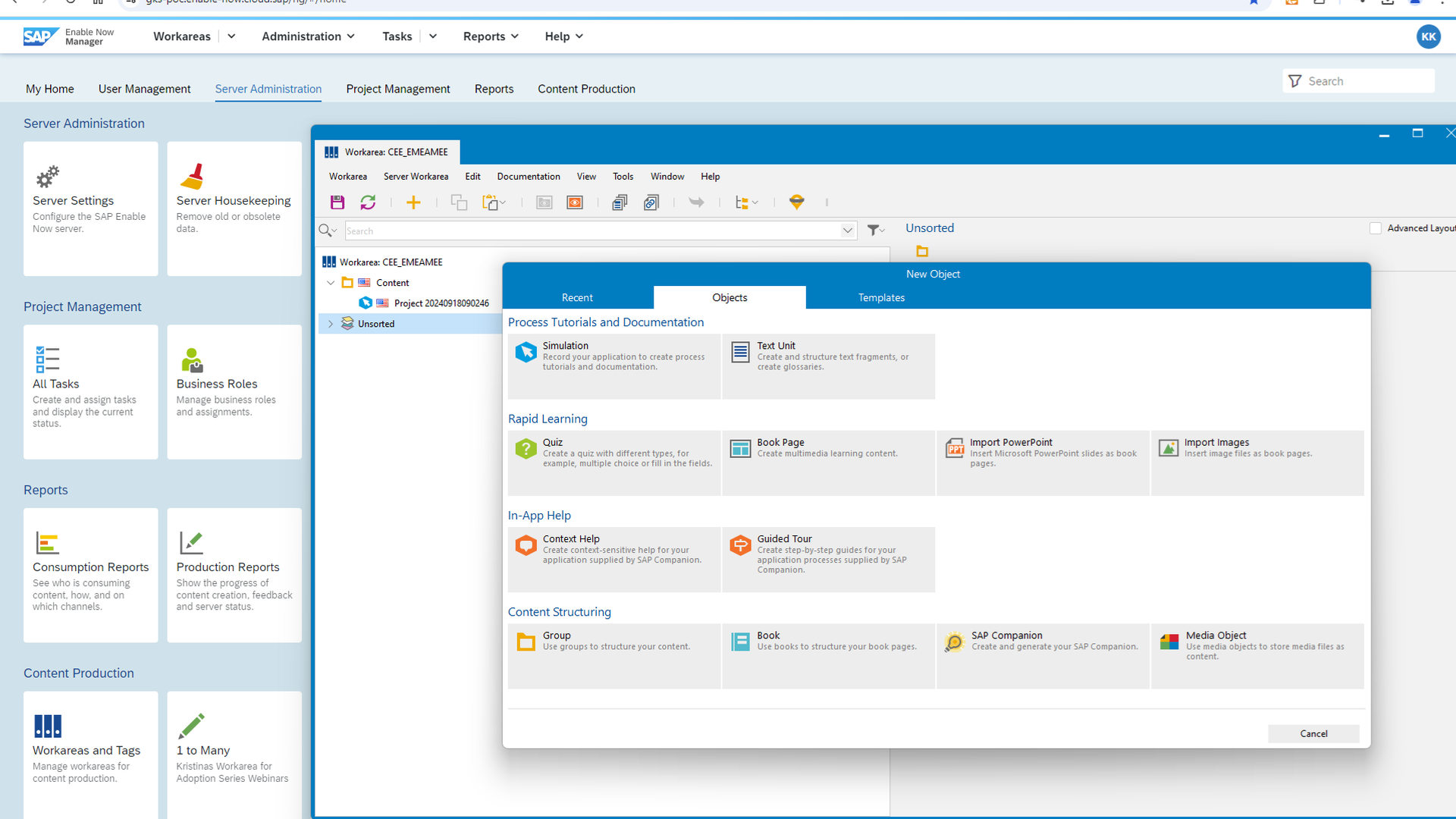
SAP Enable Now is designed to support complex enterprise environments, particularly those running SAP applications. It delivers in-app guidance, simulations, and training content tailored to enterprise workflows.
The platform supports structured learning and compliance-heavy processes. Organizations use it to ensure employees follow standardized procedures across critical systems. Its depth makes it well suited for regulated industries and large-scale deployments.
Due to its enterprise focus, SAP Enable Now works best alongside a platform like Axero. Axero provides a more approachable, centralized intranet experience where employees can access supporting documentation, updates, and resources beyond SAP environments.
Key features of SAP Enable Now
- In-app simulations: Train users within live enterprise applications.
- Process standardization: Support consistent execution across complex systems.
- Enterprise scalability: Designed for large, regulated organizations.
Best for: Enterprises running SAP-centric environments.
11. Lemon Learning

Lemon Learning specializes in contextual, step-by-step guidance inside business applications. It focuses on helping users complete tasks correctly by overlaying instructions directly within tools.
Lemon Learning emphasizes ease of use and quick deployment. Teams can build guidance without code and adapt content as processes change. This makes it suitable for organizations looking to reduce training time and support effort.
To ensure long-term consistency, Lemon Learning is often paired with Axero. Axero anchors guidance in centralized knowledge, onboarding content, and governance that supports sustainable enablement.
Key features of Lemon Learning
- Overlay guidance: Provide real-time instructions inside applications.
- No-code editor: Enable business teams to create and update content.
- Rapid deployment: Launch guidance quickly across tools.
Best for: Teams seeking straightforward, task-focused in-app guidance.
Bringing it all together
In-app guidance and enablement software helps employees succeed in the moment, but it works best when it is part of a connected digital workplace. Walkthroughs and prompts can show employees what to do, but they cannot explain why processes exist, how they connect, or how they evolve over time.
This is where Axero plays a defining role. Axero gives organizations a centralized intranet that anchors enablement with trusted knowledge, onboarding hubs, and governance. When paired with in-app guidance tools, Axero ensures employees have clarity before, during, and after they interact with workplace applications.
If you want to build an enablement strategy that scales, reduces friction, and supports real adoption, it starts with a strong intranet foundation. Book a demo today and see how Axero supports in-app guidance with clarity and control.






 info@axerosolutions.com
 1-855-AXERO-55