
Standard operating procedures sit at the center of how work actually gets done. They shape how teams complete tasks, meet compliance requirements, onboard new hires, and maintain consistency as organizations grow. Without clear, accessible SOPs, even experienced employees lose time searching for answers, repeating mistakes, or relying on informal knowledge that never gets documented.
As workplaces expand across locations, roles, and work styles, SOPs can no longer live in static documents or forgotten folders. Teams need systems that make procedures easy to create, update, approve, and follow in real time. They also need visibility into whether those procedures are actually being used. This is where modern SOP software plays a direct role in productivity, quality, and accountability.
The right SOP software helps you move from disconnected documentation to structured, repeatable processes. It gives employees one place to find instructions, understand expectations, and complete work with confidence. Leaders gain better oversight, fewer errors, and smoother handoffs between teams. Most importantly, SOPs become part of daily work instead of something people reference only when something goes wrong.
Below, we break down what SOP software is, what to consider when choosing a solution, and the platforms that organizations rely on to standardize processes at scale, starting with Axero.
Top 10 SOP software for 2026
What is SOP software?
SOP software is a digital system designed to create, manage, distribute, and maintain standard operating procedures across an organization. It replaces static documents with structured, searchable, and governed processes that employees can access when they need them.
Instead of relying on PDFs, shared drives, or email attachments, SOP software centralizes procedures in a single platform. This ensures every employee follows the most current version, with clear ownership, approval workflows, and version history. Many platforms also support checklists, forms, automation, and acknowledgments to confirm procedures are understood and followed.
At its core, SOP software helps organizations reduce variability in how work gets done. It supports compliance, improves training outcomes, and preserves institutional knowledge as teams change. When embedded into a broader digital workplace, SOP software becomes part of everyday operations rather than a standalone reference tool.
What to consider when choosing the right SOP software
Choosing SOP software is about more than documenting steps. You need a platform that fits naturally into how your teams work and scales as processes evolve.
Ease of access and usability
If employees struggle to find or follow SOPs, adoption will drop. Look for intuitive navigation, strong search, and clear formatting that supports quick comprehension.
Governance and version control
SOPs change over time. The right platform should support approvals, version history, and ownership so updates stay controlled and auditable.
Integration with daily work
SOP software works best when it connects with tools employees already use. Integrations reduce context switching and help procedures become part of normal workflows.
Visibility and accountability
Leaders need insight into usage, completion, and gaps. Reporting and analytics help ensure SOPs drive consistent outcomes instead of sitting unused.
Scalability and structure
As your organization grows, SOPs multiply. Choose software that supports structured content, permissions, and long-term organization without becoming cluttered.
10 best SOP software
1. Axero
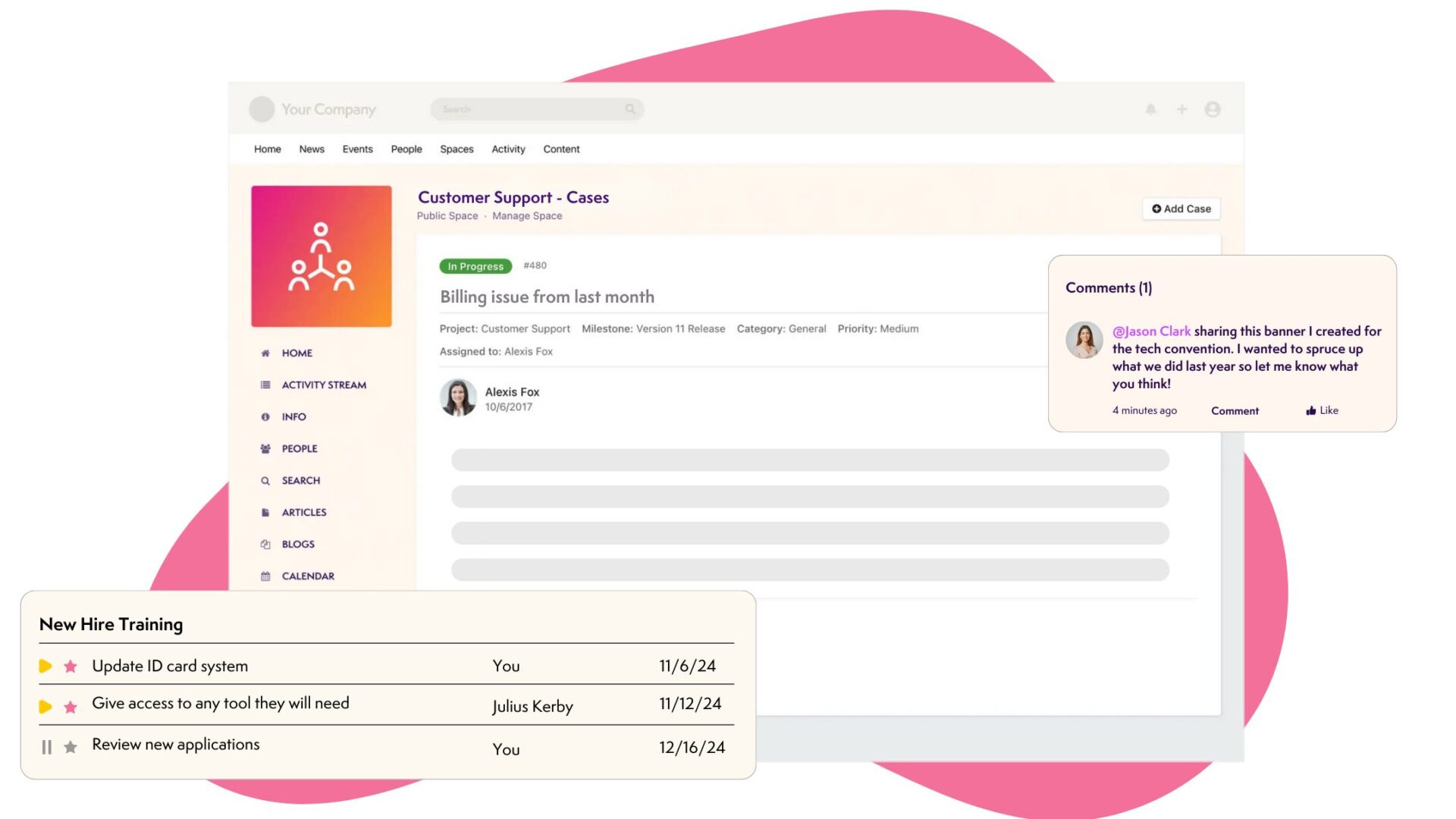
Axero provides SOP software as part of a fully integrated intranet and digital workplace. Instead of treating SOPs as standalone documents, Axero embeds them directly into how employees communicate, collaborate, and access knowledge. Procedures live alongside policies, forms, training materials, and team content, making them easier to find and follow.
With Axero, teams can create SOPs using structured pages, rich formatting, and embedded media to support different learning styles. Approval workflows and version control ensure procedures stay accurate and compliant. Permissions allow you to tailor access by role, department, or location, so employees see what applies to them without noise.
What sets Axero apart is its ability to connect SOPs to the wider employee experience. SOPs can be surfaced through targeted content, linked to onboarding resources, and reinforced through announcements and acknowledgments. This keeps procedures visible and relevant as work changes.
Key features of Axero
- Centralized SOP hub: Store procedures in one searchable platform that employees already use daily.
- Approval workflows and versioning: Maintain control over updates while preserving audit history.
- Role-based access: Deliver the right procedures to the right people without manual work.
Best for: Organizations that want SOPs embedded into a broader intranet and digital workplace.

2. Process Street
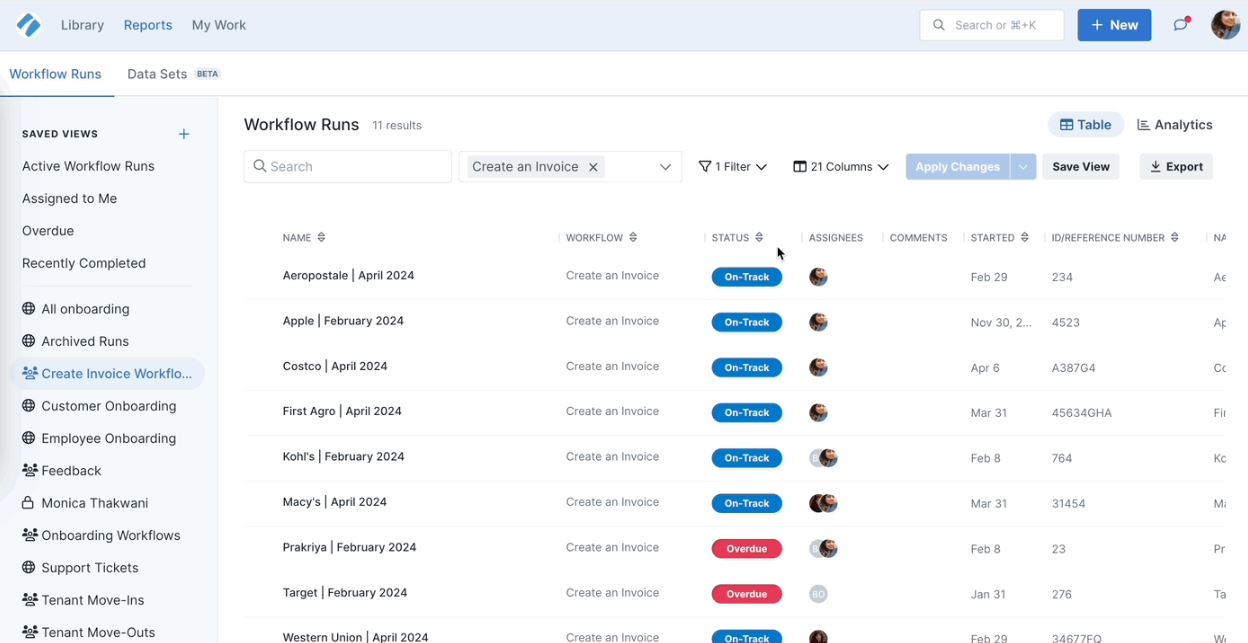
Process Street is a workflow-focused SOP platform built around checklists and repeatable processes. It is designed for teams that want to turn procedures into actionable tasks rather than static documentation. SOPs are created as templates that can be run repeatedly, ensuring consistency every time a process is executed.
The platform supports conditional logic, approvals, and form fields, which makes it useful for operational teams managing structured workflows. Managers can track progress, completion, and bottlenecks across processes, providing visibility into execution rather than just documentation.
Process Street works well for operational SOPs that require hands-on completion tracking. However, it can feel less suited for broader knowledge sharing or company-wide SOP libraries without additional structure.
Key features of Process Street
- Checklist-based SOPs: Turn procedures into repeatable, trackable workflows.
- Conditional logic: Adapt steps based on inputs and scenarios.
- Process reporting: Monitor completion and performance across teams.
Best for: Operations teams that need execution-focused SOPs with task tracking.
3. SweetProcess
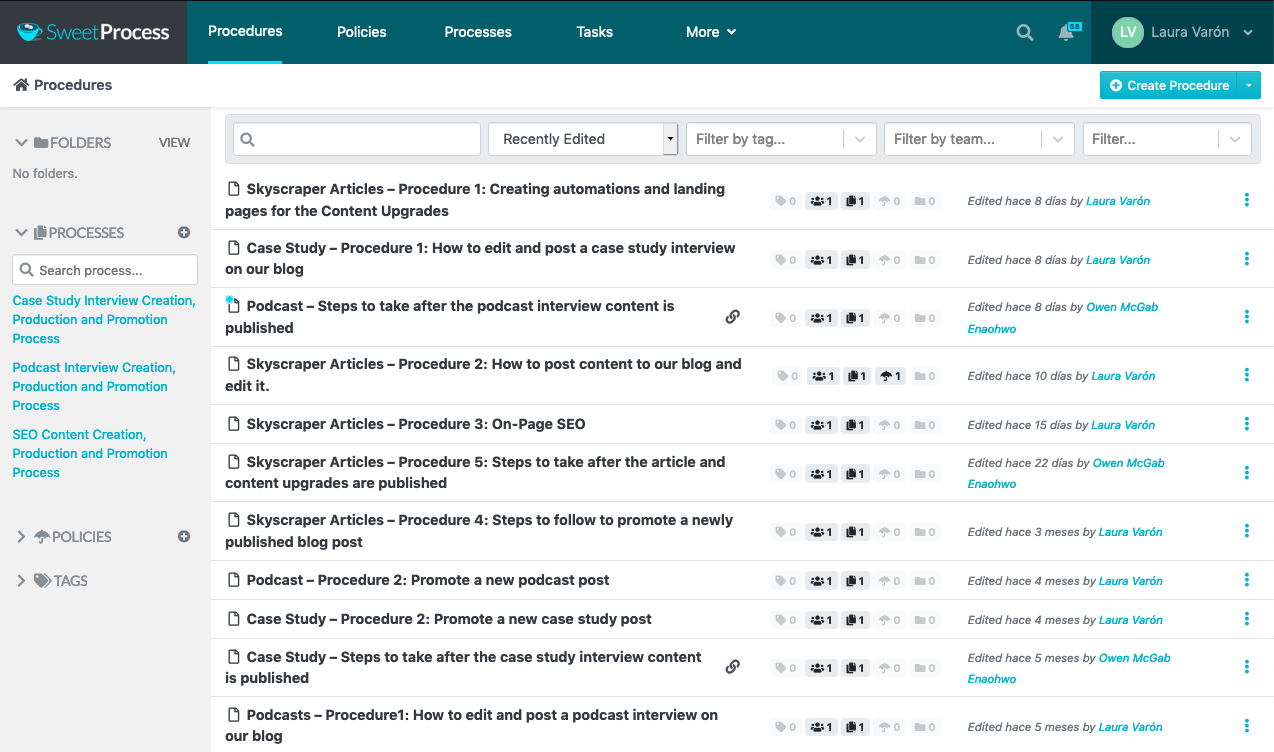
SweetProcess is built specifically for documenting procedures, policies, and processes. It offers a clean interface that makes it easy for teams to write, organize, and update SOPs without technical complexity. The platform emphasizes clarity and structure, which helps with standardization.
Users can link procedures together, assign responsibilities, and require approvals before publishing changes. SweetProcess also supports quizzes and acknowledgments, which can help confirm understanding during training or compliance efforts.
While SweetProcess excels at documentation, it functions primarily as a standalone SOP system. Organizations may need integrations or additional platforms to fully connect SOPs with daily communication and collaboration.
Key features of SweetProcess
- Structured SOP documentation: Create clear, step-by-step procedures with consistency.
- Approval controls: Ensure changes are reviewed before going live.
- Employee acknowledgments: Track who has read and understood procedures.
Best for: Teams focused on clear SOP documentation and policy management.
4. Tallyfy
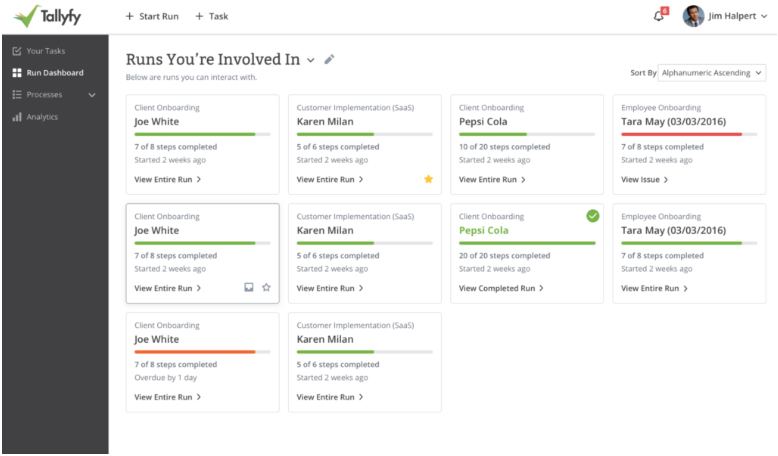
Tallyfy focuses on turning SOPs into live processes that guide employees step by step. Instead of long-form documentation, it emphasizes clear task flows that show who does what and when. This approach helps teams reduce ambiguity and keep work moving without relying on memory or informal handoffs.
SOPs in Tallyfy are built as workflows with assigned roles, deadlines, and automation triggers. Employees see only the tasks relevant to them, which reduces friction and speeds up execution. Managers gain visibility into process status and completion without chasing updates.
Tallyfy works best when SOPs need to drive consistent execution across teams. For organizations with complex knowledge needs, it may require pairing with a broader documentation or intranet platform to provide context and supporting resources.
Key features of Tallyfy
- Workflow-driven SOPs: Guide employees through processes with clear ownership.
- Automation rules: Reduce manual follow-ups and status checks.
- Real-time tracking: Monitor progress and identify delays quickly.
Best for: Teams that want SOPs tightly connected to task execution.
5. Trainual

Trainual combines SOP documentation with onboarding and training workflows. It is designed to help organizations capture institutional knowledge and transfer it efficiently to new hires. SOPs are organized into subjects and roles, making it easier for employees to learn what applies to them.
The platform supports multimedia content, quizzes, and completion tracking, which helps reinforce understanding rather than passive reading. Leaders can assign SOPs as part of onboarding paths and confirm completion through reporting dashboards.
Trainual works well for growing organizations that need structured training alongside SOPs. It is less focused on daily operational execution and more on education and standardization over time.
Key features of Trainual
- Role-based SOP paths: Deliver procedures aligned to specific job functions.
- Training reinforcement: Use quizzes and tracking to confirm understanding.
- Centralized knowledge base: Preserve institutional knowledge as teams scale.
Best for: Organizations prioritizing SOPs for onboarding and training.
6. Kissflow

Kissflow is a low-code platform that supports SOPs through process automation and workflow management. Rather than focusing solely on documentation, it allows teams to design structured processes that enforce standard steps and approvals.
SOPs in Kissflow often take the form of automated workflows connected to forms, data, and integrations. This makes it suitable for processes like approvals, requests, and compliance-driven tasks where consistency matters.
While powerful, Kissflow requires more configuration than documentation-first tools. It suits teams with technical resources and clearly defined processes but may feel complex for simple SOP libraries.
Key features of Kissflow
- Low-code workflows: Build SOP-driven processes without heavy development.
- Approval automation: Standardize decision-making and compliance steps.
- Integration support: Connect SOPs with external systems and data.
Best for: Teams that want SOPs enforced through automated workflows.
7. Scribe

Scribe specializes in rapid SOP creation through automatic documentation. It records workflows as users complete tasks and converts them into step-by-step guides with screenshots and instructions. This reduces the time needed to document processes manually.
SOPs created in Scribe are easy to share and embed into other platforms, making it useful for capturing tribal knowledge quickly. Teams often use it to document tools, systems, and repetitive tasks with minimal effort.
Scribe works best as a creation tool rather than a full SOP management system. Organizations typically pair it with an intranet or knowledge platform to provide structure, governance, and long-term access.
Key features of Scribe
- Automated SOP capture: Generate procedures by recording workflows.
- Visual step-by-step guides: Improve clarity with screenshots and annotations.
- Easy sharing: Embed SOPs into existing tools and platforms.
Best for: Teams that need to document processes quickly with minimal effort.
8. Confluence

Confluence is a collaborative workspace often used to document SOPs alongside project and technical knowledge. Teams create pages for procedures, link related content, and collaborate through comments and inline feedback. Its flexibility makes it suitable for documenting a wide range of processes.
SOPs in Confluence benefit from strong version history and collaborative editing. Teams can maintain transparency around changes and updates, which supports continuous improvement. Search and page linking help employees navigate complex documentation libraries.
However, Confluence relies heavily on manual structure and governance. Without clear standards, SOP libraries can become fragmented. Many organizations complement it with an intranet platform like Axero to improve discoverability and employee-facing experience.
Key features of Confluence
- Collaborative editing: Allow teams to co-author and refine SOPs.
- Version history: Track changes and maintain accountability.
- Content linking: Connect procedures with related documentation.
Best for: Teams that already use Atlassian tools for documentation.
9. Notion
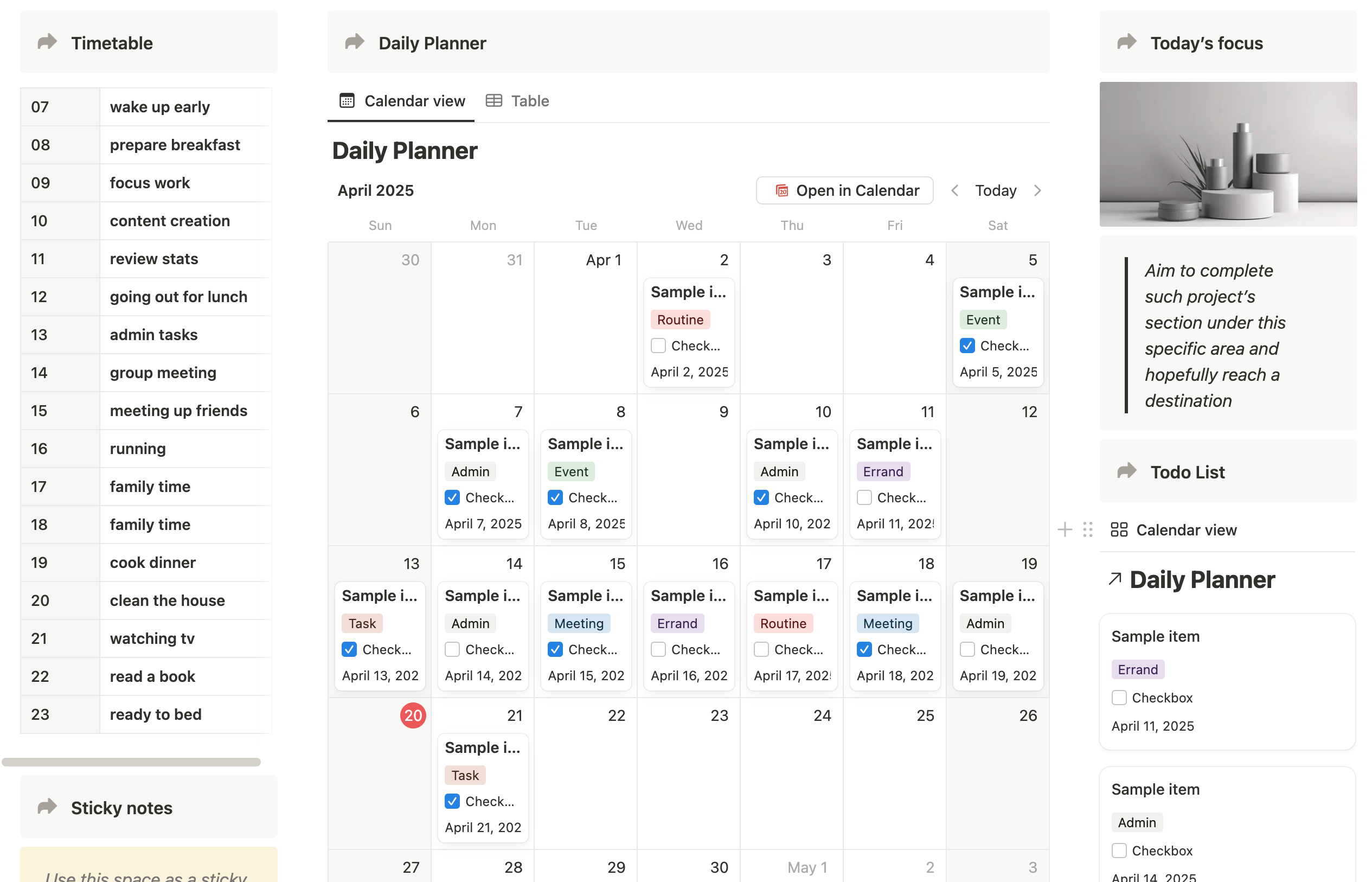
Notion is a flexible workspace that combines documents, databases, and collaboration tools. Many teams use it to create lightweight SOPs using templates, linked pages, and structured content blocks. Its adaptability makes it popular for startups and smaller teams.
SOPs in Notion can be organized by team, role, or process, with embedded media and checklists to support clarity. Databases allow teams to tag, filter, and relate procedures, which helps with organization at smaller scales.
As SOP libraries grow, governance becomes more challenging. Notion lacks native approval workflows and formal controls, which can limit its suitability for regulated environments or large organizations without additional oversight.
Key features of Notion
- Flexible SOP templates: Build procedures with rich content blocks.
- Database organization: Filter and tag SOPs for easier navigation.
- Collaborative workspace: Enable shared ownership and updates.
Best for: Small teams that need flexible SOP documentation.
10. Dozuki

Dozuki is designed for step-by-step SOPs in manufacturing, operations, and field environments. It emphasizes visual instructions, clear task sequencing, and version control to support consistent execution on the floor.
The platform supports images, videos, and approvals, which helps ensure procedures stay accurate and accessible. Mobile access makes it suitable for frontline teams that need SOPs at the point of work rather than at a desk.
Dozuki focuses heavily on operational instructions. For organizations seeking broader communication, engagement, and knowledge sharing, it works best when paired with an intranet platform that provides context and visibility.
Key features of Dozuki
- Visual work instructions: Support clarity with images and video.
- Approval workflows: Maintain controlled updates to procedures.
- Mobile accessibility: Deliver SOPs where work happens.
Best for: Operational and frontline teams with visual SOP needs.
Bringing SOPs into everyday work
SOP software only delivers value when employees actually use it. Tools that isolate procedures from daily communication and collaboration often struggle with adoption. The most effective approach is to place SOPs inside a system employees already rely on to do their jobs.
This is where Axero stands apart. By combining SOP management with intranet, communication, and knowledge sharing, we help organizations turn procedures into part of everyday work. Teams gain clarity, leaders gain consistency, and processes remain aligned as the business evolves.
If you are ready to centralize SOPs, improve adoption, and create repeatable ways of working, book a demo and see how Axero supports standardized processes at scale.













 info@axerosolutions.com
 1-855-AXERO-55